

TL;DR:
- Effective internal audit reporting support ensures reports are clear, evidence-backed, and aligned with evolving regulatory standards. Proper documentation, root cause analysis, and active follow-up drive better risk management and stronger organizational influence. Automation tools and tailored communication enhance report quality and compliance across multiple jurisdictions.
Internal audit reporting support is the structured process of ensuring audit reports are clear, evidence-backed, and actionable enough to drive real management decisions. For corporate finance professionals and risk management specialists, weak reporting support is not a documentation problem. It is a governance problem. The Institute of Internal Auditors and financial regulators in markets including Poland and Sweden have raised expectations significantly for 2026. Reports must now link findings directly to organizational risk appetite, assign clear ownership, and include deadlines for corrective action. Getting this right separates audit functions that influence strategy from those that file paperwork.
What are the mandatory components of internal audit reports in 2026?
2026 regulatory guidance mandates detailed documentation of audit objectives, timing, scope, findings, significance, and specific improvement recommendations. The purpose is direct: management must be able to make timely, evidence-based decisions from the report alone, without chasing the auditor for context.
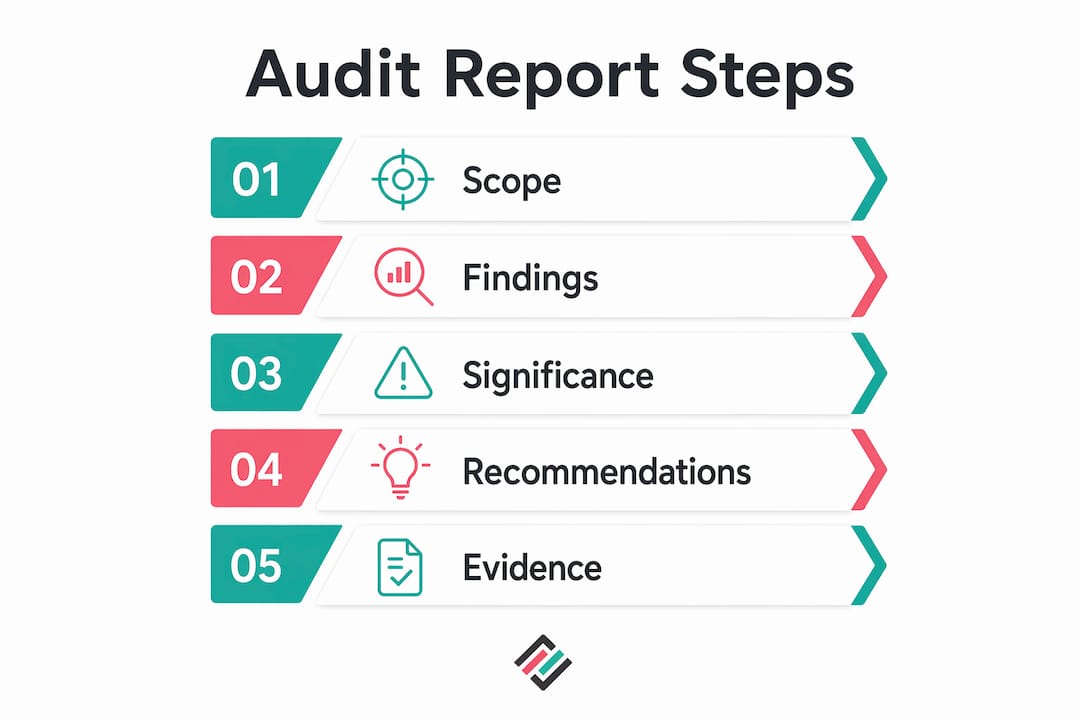
Every compliant audit report in 2026 must include the following elements:
- Audit objective: A precise statement of what the audit set out to examine and why
- Scope and timing: Start and end dates, business units covered, and any scope limitations
- Findings and facts: Documented deficiencies with supporting evidence, not summaries
- Significance rating: Each finding rated by risk level so management can prioritize response
- Recommendations: Specific, not generic, with named responsible parties and deadlines
- Management response: Formal acknowledgment and agreed corrective action plan
The significance rating deserves special attention. Regulators increasingly expect auditors to connect each finding to the organization's broader risk framework. A finding rated "medium" with no link to a strategic risk category tells management almost nothing useful.
Audit function independence is also a formal requirement, not a cultural preference. Financial regulators across the European Union, including supervisory bodies active in Poland and Sweden, require documented evidence that audit conclusions are free from management interference. This means the audit charter, reporting lines, and escalation procedures must all appear in the audit documentation itself.
The internal audit documentation standard also requires a complete audit trail. Linking verifiable evidence to conclusions remains one of the most frequently cited failures in quality reviews. Many reports are rejected not because the audit work was poor, but because the trail from evidence to conclusion was never formally recorded.
Pro Tip: Build your audit trail documentation as you work, not after the fieldwork ends. Retroactive documentation is the single most common reason otherwise solid audit work fails a quality review.
How does effective audit reporting support improve risk management?
Strong audit reporting support does more than satisfy regulators. It changes how organizations identify and respond to risk. The key mechanism is root cause analysis. Disconnecting audit findings from root causes produces recommendations that fix symptoms, not problems. A finding that "controls over vendor payments were insufficient" tells management what broke. A root cause analysis reveals whether the failure came from inadequate training, system access gaps, or a process design flaw. Only the second version produces a recommendation that actually prevents recurrence.

Internal auditors provide indispensable "outside-in" insights, exposing blind spots that internal teams miss, especially during growth or transformation phases. This is the unique value of a well-supported audit function. Finance teams embedded in day-to-day operations develop blind spots around the risks they live with constantly. Audit reporting that surfaces these blind spots gives the board and senior management a view they cannot get any other way.
Effective audit report assistance also requires active follow-up. Auditors must tie every finding to clear action plans with deadlines, and recommendation monitoring is as important as the initial finding. An audit function that issues reports and then moves on has completed half the job. The other half is tracking whether management actually implemented the agreed actions.
The following practices define high-quality audit reporting support in risk management terms:
- Tie each recommendation to a named owner and a specific deadline
- Score findings against the organization's formal risk appetite statement
- Track implementation status in a centralized register, updated at least quarterly
- Escalate overdue recommendations to the audit committee, not just management
- Integrate financial and non-financial data to give a full picture of organizational health
For finance professionals working across multiple jurisdictions, including emerging Corphedge markets like Poland and Sweden, this integrated view is especially critical. Currency risk, regulatory exposure, and operational risk do not sit in separate silos. The audit report should not either.
What common deficiencies undermine internal audit reporting quality?
The evidence on audit quality failures is specific. 40% of evaluated municipal audits showed significant deficiencies tied directly to inadequate audit evidence collection. That figure reflects a systemic problem, not isolated mistakes. It means that in four out of ten audits, the evidence base was not strong enough to support the conclusions being drawn.
"A common but often overlooked failure is inadequate documentation of the audit trail, which leads to report rejection despite valid audit work. Audit quality reviews are critical, and management must actively analyze root causes to eliminate recurring problems rather than treating each shortcoming as an isolated incident."
The table below maps the most frequent deficiencies to their practical remedies:
| Deficiency | Root cause | Practical remedy |
|---|---|---|
| Insufficient audit evidence | Fieldwork rushed or poorly planned | Structured evidence checklists tied to each audit objective |
| Symptom-level findings | No root cause analysis process | Mandatory "five whys" or fishbone analysis for each finding |
| Vague recommendations | No ownership or deadline assigned | Recommendation template requiring owner, deadline, and metric |
| Weak audit trail | Documentation done after fieldwork | Real-time evidence logging during fieldwork |
| Static audit planning | Plan not updated for emerging risks | Quarterly plan reviews incorporating VUCA risk signals |
External quality reviews of audits are essential for identifying and correcting root causes of recurring shortcomings. Audit heads who treat quality reviews as a formality miss the point entirely. The review is the mechanism for catching systemic process failures before they compound. Organizations that use quality review findings to redesign their audit methodology consistently outperform those that treat each review as a one-time compliance exercise.
Audit planning rigidity is a growing problem as risk environments change faster. Modern audit planning must be dynamic and incorporate VUCA risks, ESG metrics, and digital transformation data alongside financial data. A plan built in january that is never revised by june will miss the risks that emerged in between. Finance professionals in Poland and Sweden face particularly fast-moving regulatory environments right now, which makes dynamic planning a practical necessity, not a theoretical best practice.
Ethical accounting practices also underpin audit integrity at the evidence level. When the culture around financial reporting is strong, auditors find it easier to gather complete, honest evidence. When that culture is weak, evidence gaps multiply.
What tools and techniques support internal audit reporting?
Standardized report templates are the single highest-return investment an audit function can make. A well-designed template forces every report to include all required elements: objective, scope, findings, significance, recommendations, and management response. It also reduces the time auditors spend on formatting and increases the time available for analysis. The financial compliance documentation guide published for 2026 outlines the documentation standards that templates should be built around.
Audit management software adds a second layer of support by centralizing evidence, automating risk scoring, and tracking recommendation status. The best platforms integrate directly with the organization's risk register, so audit findings automatically update the risk picture rather than sitting in a separate report. Nearly 40% of professionals have already integrated topical audit requirements into current planning to improve quality and consistency. That adoption rate signals a shift from ad hoc reporting to structured, repeatable processes.
Pro Tip: Use a pre-issuance checklist that mirrors the regulatory requirements for your jurisdiction. Run every draft report through it before it goes to management. This single step catches the majority of documentation gaps before they become quality review findings.
Effective financial reporting techniques also apply directly to audit report construction. Clarity of structure, consistency of language, and logical flow from finding to recommendation all make reports easier for management to act on. A report that requires the reader to interpret the auditor's intent has already failed its primary purpose.
ESG and digital transformation data are now standard inputs for comprehensive audit coverage. Integrating ESG-related and digital transformation data alongside traditional financial metrics gives a full organizational health view. For finance professionals in markets like Poland and Sweden, where ESG reporting requirements are tightening under EU regulation, this integration is already a compliance requirement in many sectors.
Tailoring communication to the report recipient is the final, often neglected, element of audit reporting best practices. A board-level summary needs different language and structure than a detailed operational finding for a department head. The risk reporting checklist for finance executives provides a practical framework for calibrating report content to audience.
Key Takeaways
Effective internal audit reporting support requires documented evidence, root cause analysis, named ownership of recommendations, and dynamic planning that incorporates ESG and VUCA risk data.
| Point | Details |
|---|---|
| Document the audit trail in real time | Retroactive documentation is the leading cause of report rejection despite valid audit work. |
| Link findings to root causes | Symptom-level findings produce recommendations that fail to prevent recurrence. |
| Assign ownership and deadlines | Every recommendation needs a named owner and a specific deadline to drive implementation. |
| Use dynamic audit planning | Update the audit plan quarterly to capture emerging VUCA, ESG, and digital risks. |
| Apply external quality reviews | Quality reviews must drive methodology redesign, not just one-time compliance fixes. |
Why audit reporting support is more than a compliance exercise
I have reviewed audit reports across financial institutions and corporate finance functions for long enough to have a clear view of where the real failures happen. The reports that get rejected or ignored are almost never the result of bad audit work. They fail because the documentation does not support the conclusions, or because the recommendations are so generic that no one knows who is supposed to act on them.
The most common mistake I see is treating audit reporting support as the last step in the process. Teams do the fieldwork, form their conclusions, and then write the report. By that point, the evidence gaps are already baked in. The documentation structure needs to be built at the start of the engagement, not the end.
The second pattern I find consistently underestimated is the value of the "outside-in" perspective. Internal audit functions that stay close to management tend to soften findings and avoid the blind spots that matter most. The audit reports that actually change behavior are the ones that surface risks management did not know they had. That requires both independence and the willingness to report uncomfortable findings clearly.
AI-supported audit documentation is coming, and it will change the speed and consistency of report production. But it will not fix a weak evidence base or a culture that treats recommendations as optional. The fundamentals of good audit reporting support are human problems before they are technology problems.
— Bartas
How Corphedge supports risk-focused audit and reporting processes
Finance teams that take audit reporting seriously also need to quantify the financial risks their reports surface.
Corphedge provides currency risk management tools built around Value at Risk methodology, giving finance professionals a quantified view of exposure that feeds directly into audit findings and board-level risk reporting. The platform integrates real-time currency position data with hedging strategies based on value at risk, so audit recommendations on FX exposure come with the evidence base regulators now require. For organizations operating across Poland, Sweden, and other international markets, Corphedge connects audit insights to concrete risk mitigation. Explore the banking compliance reporting guide to see how these tools align with 2026 regulatory expectations.
FAQ
What is internal audit reporting support?
Internal audit reporting support is the structured set of processes, templates, and tools that help auditors produce clear, evidence-backed reports that management can act on. It covers everything from audit trail documentation to recommendation tracking.
What does 2026 regulation require in an internal audit report?
Regulators now require documented audit objectives, scope, timing, findings with significance ratings, specific recommendations with named owners and deadlines, and a complete audit trail linking evidence to conclusions.
Why do so many audit reports get rejected?
Inadequate audit trail documentation is the leading cause of report rejection. The audit work may be sound, but if the evidence-to-conclusion link is not formally recorded, the report cannot be validated.
How does root cause analysis improve audit report quality?
Root cause analysis forces auditors to explain why a deficiency occurred, not just that it occurred. This produces recommendations that address the actual failure point, which makes implementation more likely and recurrence less likely.
What data should modern audit reports include beyond financial metrics?
Modern audit planning requires ESG metrics, digital transformation indicators, and VUCA risk signals alongside traditional financial data to give a complete organizational risk picture.