

TL;DR:
- Fintech companies must implement automated, centralized reporting systems to meet strict regulatory deadlines for incidents and transactions. Non-compliance results in costly fines and operational restrictions, making infrastructure investment essential. Early preparation ensures smooth adaptation to upcoming harmonized EU reporting standards before 2027.
Compliance reporting for fintech companies is the systematic, timely communication of operational incidents, suspicious transactions, and financial activities to regulators under frameworks including DORA, AMLR, and MiFID II. The industry term for this practice is regulatory reporting, and it covers everything from ICT incident notifications to anti-money laundering disclosures. National Competent Authorities (NCAs), the European Supervisory Authorities (ESAs), and the newly established Anti-Money Laundering Authority (AMLA) all expect fintech firms to submit structured, evidence-backed reports on defined schedules. Getting this right is not optional. Missed deadlines and incomplete submissions carry direct supervisory consequences, including fines and operational restrictions.
What are the key regulatory requirements for compliance reporting under DORA, AMLR, and MiFID II?
Three regulations define the core reporting obligations for most EU-regulated fintechs in 2026: DORA, AMLR, and MiFID II. Each targets a different category of risk, and each carries its own submission format, deadline, and data standard.
DORA incident reporting timelines
DORA requires fintechs to report major ICT incidents within 4 hours of classification, with an intermediate report due within 72 hours and a final report within one month. Classification itself must happen without undue delay, typically within 24 hours of detection. That 24-hour window is where most firms lose time.
The regulation defines seven criteria for classifying an incident as major: client impact, reputational impact, duration, geographic spread, data loss, economic impact, and service criticality. A firm must score an incident against all seven before it can file the initial notification. Automated scoring tools that apply a weighted decision tree to these criteria are the most reliable way to meet the 4-hour submission clock.
AMLR suspicious transaction reporting
The Anti-Money Laundering Regulation shifts the reporting standard from "unusual" to "suspicious" transactions, covering known or reasonably suspected criminal activity, including attempted transactions that never completed. This is a meaningful change. Under the previous national frameworks, "unusual" left significant interpretive room. "Suspicious" sets a higher, more consistent bar.
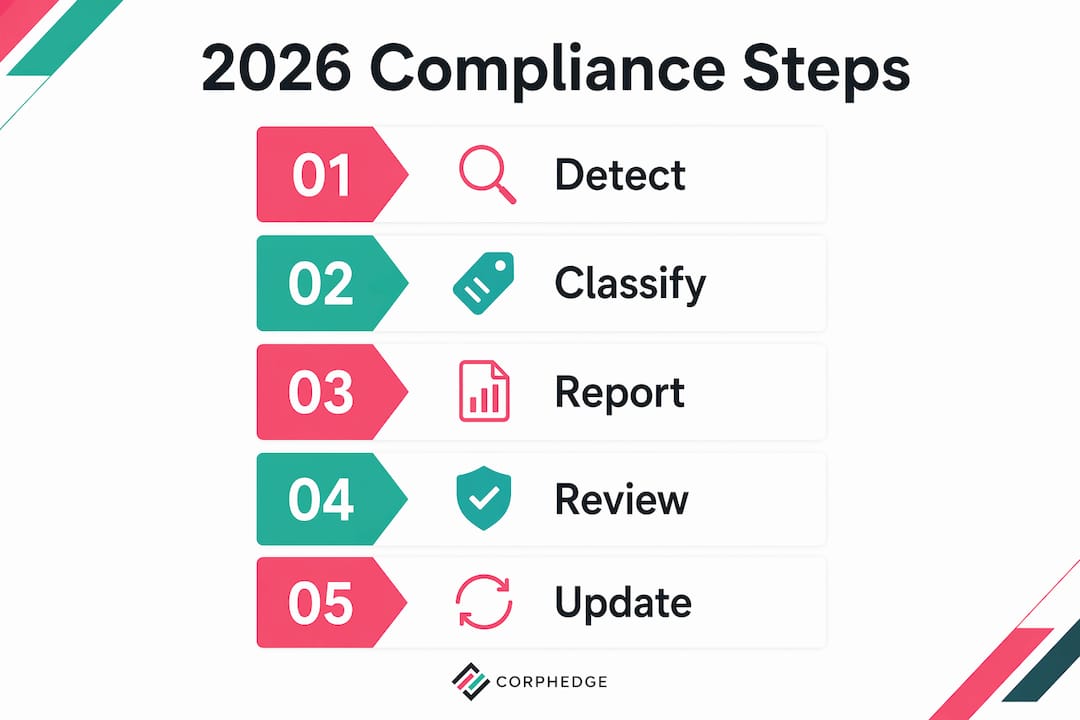
AMLA will replace the current patchwork of national reporting systems with a single harmonized EU template by july 2027. Fintechs currently operating across multiple EU member states run as many as 27 separate reporting processes for suspicious transactions. Consolidating those into one infrastructure requires significant system investment and early preparation.
MiFID II transaction reporting
MiFID II requires investment firms to submit comprehensive transaction reports by the end of the following working day (T+1). Reports must include detailed data fields such as ISIN codes, execution timestamps, and counterparty identifiers. Post-trade transparency reports for equity products must be published within 1 minute of execution, and within 5 minutes for non-equity instruments. These are tight windows that require automated trade capture systems, not manual processes.
Key reporting obligations at a glance:
| Regulation | Report type | Deadline |
|---|---|---|
| DORA | Major ICT incident (initial) | 4 hours after classification |
| DORA | Intermediate report | 72 hours after classification |
| DORA | Final report | 1 month after classification |
| AMLR | Suspicious transaction report | Without undue delay |
| MiFID II | Transaction report | T+1 (end of following working day) |
| MiFID II | Post-trade transparency (equity) | Within 1 minute of execution |
How can fintechs implement efficient compliance reporting systems?
Efficient regulatory reporting depends on infrastructure, not effort. A compliance team working from spreadsheets and shared drives will always fall short of the deadlines DORA and MiFID II impose.

Regulators now treat reporting as a continuous "data product" rather than a periodic filing. That means firms need centralized, searchable repositories for incident evidence, transaction logs, and reporting records. Relying on unstructured tools like SharePoint creates retrieval delays that become critical failures when a supervisor asks for documentation within hours.
The following practices form the foundation of a working compliance reporting system:
- Automated incident classification. Deploy tools that score incoming ICT incidents against DORA's seven criteria in real time. Manual scoring introduces human error and delays.
- Integrated regulatory templates. Embed the official NCA and ESMA reporting templates directly into your incident management and trade capture workflows. Do not treat template completion as a separate step.
- Centralized evidence store. Maintain a single, indexed repository for all incident reports, suspicious transaction filings, and transaction records. Every entry should be timestamped and retrievable within minutes.
- Defined internal roles. Assign a named compliance officer with direct management reporting lines and a compliance manager responsible for day-to-day operations. AMLR mandates that these officers hold senior, independent positions with legal protections against retaliation.
- Multi-jurisdictional mapping. For fintechs operating in Poland, Sweden, or other EU markets, map each jurisdiction's current NCA reporting channel against the future AMLA harmonized format. Build the bridge now, not in 2027.
Pro Tip: Set your internal classification deadline at 18 hours after detection, not 24. That 6-hour buffer gives your team time to escalate edge cases and still file the initial DORA notification within the 4-hour post-classification window.
What are common compliance reporting challenges for fintechs?
The most common failure point in fintech regulatory reporting is confusing detection time with classification time. Detection is when your monitoring system flags an event. Classification is when a qualified person determines the event meets the regulatory threshold for a major incident. Fintechs that conflate these two timestamps routinely miss the 4-hour initial notification deadline because they start the clock too late.
Fragmented suspicious transaction reporting across EU jurisdictions is the second major operational challenge. A fintech with customers in Germany, France, and the Netherlands currently files under three separate national frameworks, each with different templates and submission portals. The AML compliance checklist for digital assets illustrates how complex this gets for firms handling crypto alongside traditional financial products.
Third-party ICT risk reporting adds another layer. DORA requires fintechs to document and test exit strategies for critical technology providers. If a cloud vendor fails, the firm must demonstrate it can migrate to an alternative without a reportable service disruption. Most fintechs have the contracts but not the tested exit plans.
Supervisory focus has shifted from paper-based policy reviews to operational validation. Regulators now expect fintechs to demonstrate that their incident response and risk reporting processes actually work, not just that the policies exist on paper. A well-written procedure that has never been tested is not compliance.
Resource allocation is the underlying constraint. Compliance functions at smaller fintechs are often understaffed relative to the reporting volume DORA and AMLR generate. The solution is not always hiring. Automated classification, pre-built templates, and centralized data stores reduce the manual workload per report significantly. The risk reporting checklist for finance executives outlines how to prioritize these investments by regulatory deadline and operational risk.
How should fintechs prepare for upcoming regulatory updates?
The regulatory calendar through 2027 is dense, and the firms that prepare early will avoid the system overhaul costs that late movers face. AMLA's Level 2 package, including 23 regulatory technical standards (RTS), implementation technical standards (ITS), and guidelines, is due by july 2026. The harmonized suspicious transaction reporting format goes live by july 2027.
Preparation should follow this sequence:
- Audit current reporting processes by jurisdiction. Map every suspicious transaction reporting workflow against the future AMLA harmonized template. Identify gaps in data fields, submission channels, and internal approval chains.
- Assess ICT third-party contracts. Review all critical vendor agreements for DORA-compliant exit clauses. Document and test at least one exit scenario per critical provider before the end of 2026.
- Schedule threat-led penetration testing (TLPT). Supervisors are moving toward TLPT as a validation tool for incident reporting maturity. Firms that have completed at least one TLPT cycle will be better positioned for supervisory dialogue.
- Upgrade your incident classification system. If your current tool does not apply DORA's seven criteria automatically, replace or augment it before the next supervisory review cycle.
- Prepare for AMLA supervisory dialogue. AMLA will begin direct supervision of high-risk obliged entities. Compliance officers should document their governance structures, reporting lines, and resource allocations now, not when the first supervisory letter arrives.
Pro Tip: Run a tabletop simulation of a major ICT incident at least twice a year. Walk through the full DORA reporting sequence from detection to final report. You will find gaps in your process faster than any audit will.
Smaller fintechs are not exempt from these obligations. DORA applies proportionately to firms of all sizes, with documentation and testing requirements calibrated to scale and infrastructure. Proportionality does not mean exemption. It means the bar is set at a level appropriate to your operational footprint, but the bar still exists.
The regulatory audit accounting guide for compliance officers provides a practical framework for aligning internal audit cycles with the DORA and AMLR supervisory timelines now in effect.
Key Takeaways
Effective compliance reporting for fintech companies requires automated classification, centralized data infrastructure, and early preparation for the AMLA harmonized reporting format due by july 2027.
| Point | Details |
|---|---|
| DORA timelines are strict | File the initial ICT incident report within 4 hours of classification, not detection. |
| AMLR raises the reporting bar | Report "suspicious" transactions, including attempted ones, under the new harmonized EU standard. |
| MiFID II demands speed | Submit transaction reports by T+1 and post-trade transparency within 1–5 minutes of execution. |
| Automate classification first | Use a weighted seven-criteria scoring tool to meet DORA deadlines without manual bottlenecks. |
| Prepare for AMLA now | Fintechs running multiple national reporting processes must consolidate before july 2027. |
Why compliance reporting is really an infrastructure problem
Most compliance officers I speak with frame reporting as a process challenge. They focus on checklists, deadlines, and who signs off on what. That framing is understandable, but it misses the root cause of most reporting failures.
The real problem is infrastructure. When your incident data lives in three different systems, your suspicious transaction records are in a shared inbox, and your MiFID II trade logs require manual extraction, no amount of process discipline will get you to a 4-hour DORA notification. The clock does not care about your workflow diagram.
What I have seen work, particularly at fintechs scaling into new EU markets like Poland and Sweden, is treating the compliance reporting function as a data platform. That means a single source of truth for all reportable events, automated triggers that start the classification clock at detection, and pre-built templates that populate from live data rather than manual entry. The firms that build this infrastructure before a supervisory review are the ones that pass it.
The other lesson I would share is about governance. AMLR's requirement for senior, independent compliance officers with direct management reporting lines is not bureaucratic formality. It reflects a real operational need. Compliance officers who sit three levels below the CFO and lack budget authority cannot move fast enough when a major incident hits. Structural independence is a reporting speed advantage, not just a regulatory checkbox.
Compliance reporting done well is not a cost center. It is the evidence base that lets your firm operate with regulatory confidence in every market you enter.
— Bartas
Corphedge supports fintech risk management and reporting
Fintech compliance officers managing cross-border operations face currency exposure alongside their regulatory reporting obligations. Corphedge provides foreign exchange risk management tools built for companies operating across multiple EU markets, including Poland and Sweden, where currency volatility directly affects financial reporting accuracy.
Corphedge's value-at-risk hedging tools give compliance and finance teams a quantified view of FX exposure, which feeds directly into risk reporting frameworks required under DORA and internal risk assessments. Real-time position data and integration capabilities mean your FX risk data stays current and audit-ready. For fintechs that need their financial risk posture to match their regulatory reporting standards, Corphedge offers a practical starting point. Explore the full FX risk management features to see how they fit your compliance workflow.
FAQ
What is compliance reporting for fintech companies?
Compliance reporting for fintech companies is the structured, timely submission of operational incidents, suspicious transactions, and financial activity data to regulators under frameworks like DORA, AMLR, and MiFID II. It covers both ongoing reporting obligations and event-triggered notifications.
What are the DORA incident reporting deadlines?
DORA requires an initial notification within 4 hours of classifying a major ICT incident, an intermediate report within 72 hours, and a final report within one month. Classification must occur within 24 hours of detection.
How does AMLR change suspicious transaction reporting?
AMLR replaces the "unusual transaction" standard with a "suspicious transaction" standard, covering known or reasonably suspected criminal activity including attempted transactions. Harmonized EU reporting templates will replace national systems by july 2027.
Do smaller fintechs need to comply with DORA reporting requirements?
Smaller fintechs are not exempt from DORA. The regulation applies proportionately, meaning documentation and testing requirements scale to the firm's size and infrastructure, but the core reporting obligations remain in place for all covered entities.
What is the MiFID II transaction reporting deadline?
MiFID II requires investment firms to submit transaction reports by the end of the following working day (T+1). Post-trade transparency reports for equity instruments must be published within 1 minute of execution.