

Managing FX risk and accounting across multiple banks and currencies exposes finance teams to technical hurdles and compliance gaps. Most point solutions lack integrated multi currency accounting, real time reconciliation, and full regulatory compliance for payment institutions. This list lets finance teams and controllers pick a payment institution accounting solution that covers FX risk, automation, and compliance without missing key integrations.
Table of Contents
Corphedge

At a Glance
The company advertises industry recognition as a top risk management provider in 2023. Corphedge pairs real-time FX analytics with an educational academy and personalized demos for clients. It also lists an integration with Corpay to connect trading and execution workflows.
Core Features
Corphedge delivers real-time FX risk analysis and portfolio tracking that surfaces current exposures and value moves. The platform supports custom risk management policies and trade and cash flow import and export, and it includes risk reports and sensitivity analysis tied to Value at Risk methods.
Key Differentiator
The single standout is the combination of straightforward SaaS tools with hands-on expert support and training targeted at small and mid-sized companies. That mix helps teams without dedicated treasury staff apply large-corporate hedging practices.
Pros
Corphedge simplifies FX risk work for finance teams that lack full treasury departments by pairing software output with expert guidance. The platform supplies real-time data and scenario analysis so you can see how exposures shift under different rates. It also provides educational resources, demo sessions, and at least one third-party integration for trade execution.
Cons
- Onboarding can be steep for smaller teams; some organizations need implementation support to get the model and imports configured.
Notable Integrations
- Corpay
Who It's For
Corphedge suits CFOs, treasurers, and finance teams at SMEs and mid-sized companies that handle cross-border cash flows. It fits organizations that want to keep hedging decisions in-house but lack deep treasury expertise. It is less suitable for very small companies with negligible FX exposure.
Unique Value Proposition
Personalized demos and an educational academy turn corporate hedging techniques into operational policies for small teams. That approach reduces reliance on external consultants by teaching your people to run VaR-backed strategies and produce actionable risk reports.
Real World Use Case
A European importer imports USD goods and uses Corphedge to hedge USD-denominated cash flows. The team imports cash flow forecasts, applies policy rules, and receives sensitivity reports to limit profit volatility from currency swings.
Pricing
Pricing is not publicly listed. The vendor indicates a subscription or tiered model, so budgeting should assume recurring fees and possible professional services for initial setup.
Website: https://corphedge.com
Embat
At a Glance
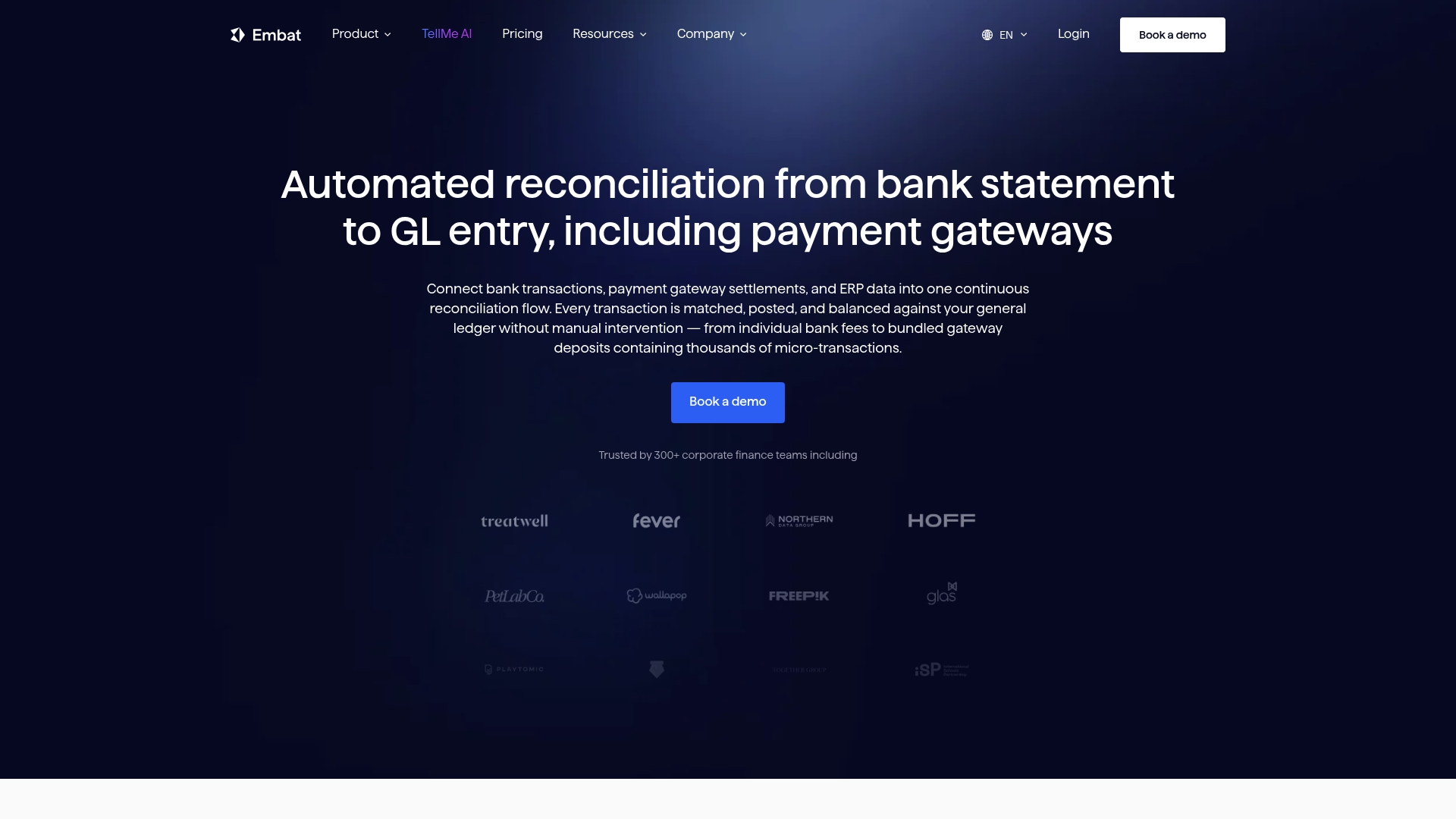
Embat reports connectivity to more than 15,000 banks, enabling statement reconciliation across a broad set of institutions. That global reach supports cross-border cash visibility for companies with many banking relationships. The platform pairs bank feeds with ledger data for continuous matching.
Core Features
Embat connects bank feeds and ERPs via API and file transfers, running continuous transaction matching and automated reconciliation. The system posts to the general ledger and matches invoices as part of a closed-loop flow, while analytics and AI powered rules surface exceptions and root causes. Bidirectional connectors support major ERPs and common payment processors.
Key Differentiator
The product centers on an AI powered continuous reconciliation engine that learns from past matches and refines rules over time. That learning component reduces repeated exceptions and lowers reliance on manual rule updates. The engine focuses on matching quality and then feeding corrected mappings back into the system.
Pros
Embat reports automation rates of 90%+, which the vendor says cuts manual reconciliation effort and shortens month end close time. The platform advertises compliance with ISO 27001 and SOC 2, and it logs audit trails for reconciliations and GL postings. Integrations with large ERPs and broad banking connectivity support multinational setups and high transaction volumes.
Cons
- Trustpilot feedback highlights complexity during initial setup and configuration, so expect implementation resources or vendor support.
- Performance depends on the quality of each bank and ERP API connection, and variability can affect reliability.
- Pricing is modular and tailored. Limited free trial details are listed, which means procurement requires direct vendor consultation.
When It May Not Fit
If your architecture uses highly customized ERPs or legacy bank connectivity, implementation complexity could extend deployment time. Small teams with no implementation capacity may find the rollout resource intensive. Organizations that need out of the box, fixed-price solutions for a single country may prefer simpler point tools.
Notable Integrations
Embat lists connectors for SAP S/4HANA, Oracle NetSuite, and Microsoft Dynamics 365, plus Sage and Odoo. Banking connectivity covers open banking and SWIFT protocols. Payment service providers include Stripe, PayPal, Adyen, and Worldpay.
Who It's For
Large corporate finance teams and multinational treasury groups that reconcile many bank relationships and need continuous cash position accuracy. The product suits teams that can allocate implementation resources and want to reduce recurring manual matching.
Real World Use Case
The vendor reports a multinational retailer connected more than 15 banks and multiple ERPs to automate payment gateway reconciliation. That example reduced manual entry and shortened month end closing by over four days while giving near real time cash visibility across regions.
Pricing
Pricing is not publicly specified. The vendor describes modular, tailored plans that vary by bank volume, ERP scope, and implementation level. Prospective buyers must contact sales for a quote and a scoped proposal.
Website: https://embat.io/account-reconciliation-automation
JPS-iQ Suite
At a Glance
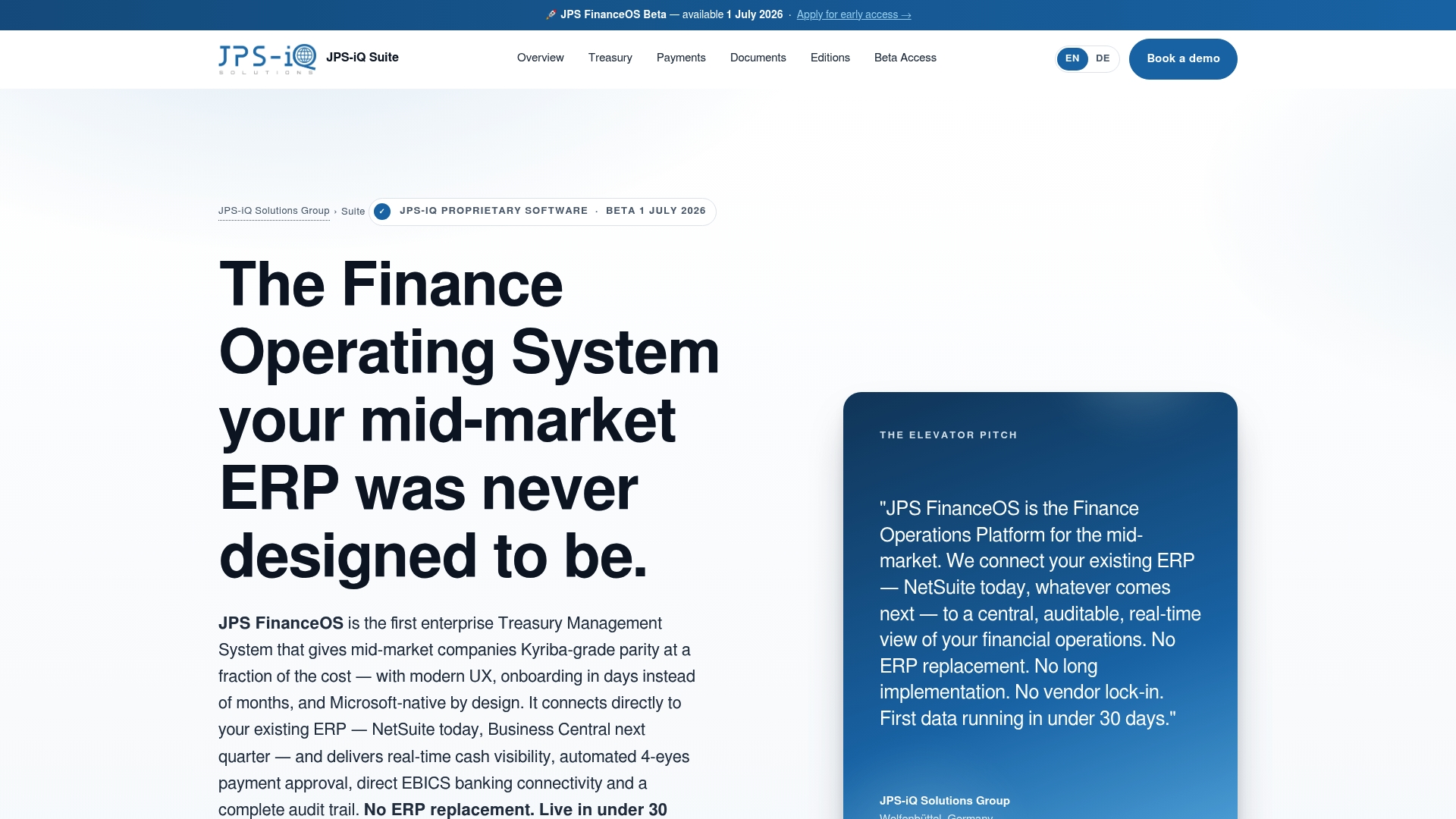
According to the vendor, JPS-iQ Suite launches in beta on July 1, 2026. The vendor advertises fast onboarding in 2–4 weeks, enabling mid market teams to get core treasury functions live quickly. The product emphasizes Microsoft native architecture and auditability by design for stored records.
Core Features
JPS-iQ Suite delivers real time cash and liquidity management alongside cash forecasting, FX management, and covenant monitoring in one modular system. It automates role based payment approvals with an auditable trail and sanctions screening while keeping payments linked to ERP workflows. The platform ingests documents with AI powered classification and stores archives in your SharePoint environment.
Key Differentiator
The company states it packages enterprise treasury features into a modular Finance Operating System that activates in weeks at lower cost than traditional treasury platforms. Native connectors for Microsoft 365 and deep NetSuite links aim to reduce integration work. That positioning targets mid market teams that need treasury depth without replacing their ERP.
Pros
Fast onboarding and a short implementation window reduce finance team disruption. Native NetSuite support, including NetSuite SuiteQL, and Microsoft integration let teams keep data inside familiar systems while adding treasury controls. Modular licensing lets you enable only cash, payments, or forecasting as needed, which keeps initial costs down and focuses IT effort.
Cons
- Limited to mid market companies; very small entities with simple cash workflows will find the product heavier than necessary.
- Full functionality relies on an existing digital banking setup and a technical contact for bank connections.
- The offering is a beta release, so some integrations and advanced modules may still evolve.
- Initial bank and ERP configuration can require professional services for secure connectivity.
When It May Not Fit
If you lack any digital banking or an IT resource to manage API or EBICS links, this product will demand extra effort. Organizations that want a single light accounting tool without treasury features will find the platform overqualified. Firms requiring off the shelf small business banking integrations may prefer simpler products.
Notable Integrations
- NetSuite SuiteQL / REST API for bidirectional ledger and transaction sync.
- EBICS banking connectivity with KONFIPAY or native EBICS for German bank links.
- Open Banking / PSD2 via OAuth 2.0 for account and statement imports.
- Microsoft 365 & Azure services including SharePoint, Teams, and Azure Key Vault.
- ECB FX rates and EURIBOR feeds for market reference pricing.
Who It's For
Finance teams at mid market companies that need enterprise grade treasury features without an ERP replacement. Compliance minded controllers who want auditable payment approvals and document archives in their own SharePoint environment. Treasury specialists bridging bank connectivity and forecasting for multibank setups.
Real World Use Case
A manufacturing firm connected JPS FinanceOS to their NetSuite ERP and multiple German banks via EBICS. Daily cash visibility and automated payments replaced manual spreadsheets. The finance team now runs scenario driven daily forecasts and keeps a full payment audit trail.
Pricing
Pricing is not specified. Contact sales for a custom quote based on modules and bank integration scope.
Website: https://suite.jps-iq.com
FintraAccount
At a Glance
FintraAccount's marketing materials state operational automation cuts manual work by 85%. That claim highlights the product's focus on automating accounting tasks for payment firms. The platform centers on multi currency handling, liquidity controls, and built in compliance for FCA regulated institutions.
Core Features
FintraAccount combines multi currency support with real time exchange rates and conversions, automated accounting workflows, and reconciliation tools that reduce repetitive ledger work. The platform also delivers real time analytics and dashboards alongside liquidity management tools with monitoring and rebalancing alerts. Built in compliance features include AML screening and audit trails to support regulatory reporting.
Key Differentiator
The platform is purpose built for payment institutions, integrating multi currency processing, automation, and compliance into an API first architecture. That integration targets firms that must combine daily accounting operations with strict client money and AML requirements.
Pros
The product targets payment institutions that need multi currency accounting and operational automation. It promises to cut manual work dramatically, and that figure supports the automation claim. Real time visibility into balances and transactions helps controllers shorten reconciliation cycles. The architecture supports extensive banking and trading integrations and scales for growing transaction volumes.
Cons
- Pricing details are not public. That opacity makes budgeting difficult for smaller teams.
- Setup and integration often require technical expertise. Implementation may need engineering resources.
- Limited consumer facing features. The product focuses on institutional workflows rather than retail experiences.
When It May Not Fit
Small payment startups with tight budgets may find the pricing model unsuitable. Teams without in house engineering or systems integration capacity will struggle during deployment. Organisations that need consumer portals or white labeled customer apps will find the offering narrow in scope.
Notable Integrations
- Banking APIs
- Trading Platforms
- Analytics Tools
Who It's For
FCA regulated payment processors and financial firms that handle cross border transactions will get the most value. Financial controllers who need faster reconciliation and audit trails will benefit. Treasury teams managing FX liquidity and rebalancing alerts will also find the functionality relevant.
Real World Use Case
A FCA regulated FX payment provider automates daily reconciliation with FintraAccount to match settlement records and ledger entries. The system supports AML screening and client money audit trails while producing regulatory ready reports. That workflow reduces manual handoffs and raises reporting transparency.
Pricing
Pricing is not specified publicly. The vendor positions the product for enterprise deployments, so contracts and fees are likely custom and tiered to volume and integration scope.
Website: https://account.fintranet.io/features
PaySaaS
At a Glance
The vendor advertises a 2–3 month global launch timeline. PaySaaS targets payment institution accounting solutions with built in multi currency accounting, card issuing, and compliance tooling. The product focuses on fast deployment, modular workflows, and white label delivery for regulated issuers.
Core Features
PaySaaS combines front and back end payment workflows with pre integrated banks, point of sale, and payment methods, plus customizable onboarding and card issuing modules. The platform supports PSD3 readiness, real time risk management, and multi currency foreign exchange accounting while exposing a full stack API for custom integrations. Security features include encryption, role based access, and two factor authentication.
Key Differentiator
PaySaaS packages payments, compliance, and card issuing in a single configurable platform aimed at rapid market entry. Its product angle centers on heavy customization and standards readiness while targeting regulated issuers that need both accounting controls and branded customer experiences.
Pros
The integrated approach reduces the number of point solutions your finance and compliance teams must manage. That reduces reconciliation points and shortens operational handoffs. The vendor advertises the 2–3 month launch timeline, which may speed product rollout for teams with internal compliance support. Pre integrated compliance checks and real time monitoring lower manual review work and help maintain audit trails. Strong security controls and white label delivery make the platform suitable for regulated institutions and fintechs that need a branded product.
Cons
-
Third party reviews were not provided in the product data, so independent usability and support feedback is limited.
-
Setup may be complex for smaller institutions that lack an in house integration team. Implementation work may require vendor services.
-
Pricing is not published in the product data, suggesting a custom or enterprise pricing model that can be hard to budget for.
Who It's For
Regulated financial institutions, E Money issuers, and fintechs that need a single vendor to handle payments, card issuing, and accounting will benefit most. Teams that have compliance staff and technical resources to adapt configurable workflows will extract more value. Organizations seeking a white label product experience fit this profile.
Real World Use Case
A payment institution used PaySaaS to launch a branded digital banking product with multi currency accounts, integrated foreign exchange accounting, and in line compliance checks. The provider deployed onboarding flows, issued cards, and connected settlement banks while keeping reporting within the same platform.
Pricing
Pricing is listed as not applicable in the product data and no public tiers are shown. Expect vendor quoted or enterprise pricing and direct sales engagement for specific deployment and licensing details.
Website: https://paysaas.com
Verifo
At a Glance
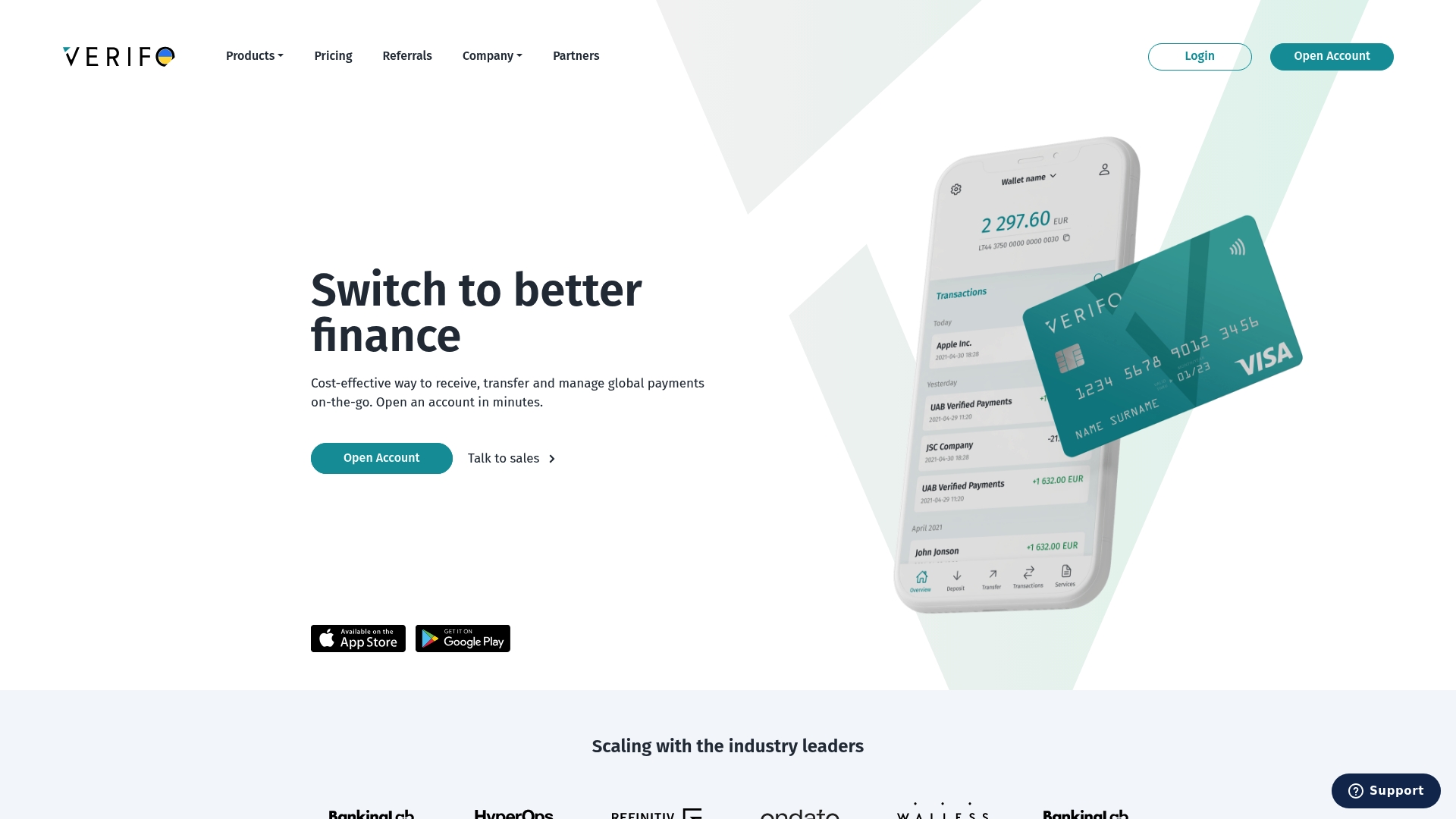
Verifo states it is a licensed e money institution supervised by the Bank of Lithuania. The vendor reports account opening in minutes. The product targets EU businesses that need multi currency accounts, SEPA and SWIFT payments, and Visa debit cards for travel spending control.
Core Features
Verifo issues individual IBAN accounts and handles SEPA payments in euros plus SWIFT transfers in 60+ currencies. The cloud-based payment platform supports global collections, multi currency balances, and payment flows tailored to business needs. Card management comes through Visa debit cards and a mobile app that controls spending and card status instantly.
Key Differentiator
Verifo’s angle is fast onboarding combined with a compliance focus for EU businesses, giving regulated multi currency banking access quickly and with fewer onboarding steps than traditional banks.
Pros
Cost effective setup and quick onboarding reduce the time your finance team spends opening accounts and moving funds. That regulatory claim gives reassurance to compliance officers managing cross border flows inside the EU. Partnerships with established industry players and a mobile app help small finance teams control cards and balances on the go.
Cons
- Pricing details are not published publicly, so total cost may be unclear until you request a quote.
- API capabilities and integration limits are not documented in the available summary, which complicates technical evaluation.
- Feature set skews business focused; consumer banking features are not emphasized for retail customers.
When It May Not Fit
If you need fully transparent, published pricing, Verifo may not match your procurement timeline. Large enterprises that require detailed API documentation and sandbox testing could find information lacking. Banks or teams needing broad consumer banking features should look elsewhere.
Who It's For
Small to medium sized businesses, e commerce platforms, freelancers, and sole traders operating in or expanding into the EU. Finance managers who need regulated accounts, multi currency receipts and payments, and physical cards for staff travel will find this relevant.
Real World Use Case
A Lithuanian e commerce startup opens a Verifo account to collect euro and US dollar payments into dedicated IBANs. The company issues Visa debit cards to staff for travel and uses the mobile app to freeze cards after lost card reports.
Pricing
Pricing is listed as "Not applicable — informational only." Specific fees and plans must be requested directly from Verifo for an accurate cost estimate.
Website: https://verifiedpayments.com
Comparison of alternatives
Corphedge uniquely integrates real-time FX analytics with structured training tools, setting itself apart among FX management platforms. However, other options excel in automation, scalability, and regulatory compliance for addressing varied business needs.
Automation and FX Analysis Depth
Corphedge stands out for its educational academy and expert-guided demos, assisting SMEs in developing FX risk strategies. Conversely, Embat prioritizes continuous transaction matching with a reported automation rate of over 90%, enabling significant reductions in manual reconciliation efforts—critical for multinational corporations managing varied cash flows.
Suitability for Rapid Implementation
While Corphedge offers targeted solutions for policy creation and exposure analysis, PaySaaS enables fast deployment, particularly for teams needing configurable workflows that integrate payments and multi-currency accounting. Verifo focuses on expeditious account creation in compliance-driven environments, making it suitable for EU businesses requiring simple and effective solutions for their banking needs.
Best fit
- For organizations lacking treasury expertise but with FX exposure, Corphedge provides tailored risk management coupled with educational resources.
- Finance teams aiming for high automation rates in reconciliation processes can gain efficiency using Embat, with its advanced continuous transaction matching.
- Teams seeking a rapid market-entry solution with configuration options and branding capabilities should consider PaySaaS.
- Businesses managing regulated accounts with multi-currency receipts and payments benefit from Verifo, offering fast onboarding and card management solutions.
Our pick
Corphedge is the top recommendation for organizations aiming to employ quality FX analytics while fostering in-house expertise for risk management strategies. Its educational support best serves SME finance teams managing cross-border exposures without extensive treasury resources. However, larger entities may find Embat’s automation capabilities more suitable for scaling high-volume reconciliation workflows.
Choosing a foreign exchange risk management solution involves evaluating features that help businesses effectively manage exposures and optimize financial operations.
| Product | Core Feature | Key Differentiator | Best For | Pricing | Notable Limitation |
|---|---|---|---|---|---|
| Corphedge | Real-time FX risk analysis | Expert support and demos | CFOs and finance teams at SMEs | Price not published | Onboarding may require setup support |
| Embat | Automated bank reconciliation | AI-powered continuous matching | Multinational treasury teams | Price not published | Setup complexity for custom ERP connections |
| JPS-iQ Suite | Treasury cash management | Modular Finance Operating System | Compliance-minded controllers | Price not published | Currently in beta; advanced modules evolving |
| FintraAccount | Multi-currency handling | Purpose-built for payment institutions | FCA regulated payment processors | Price not published | Requires engineering resources for integration |
| PaySaaS | Multi-currency accounting | Payments and compliance in one platform | Regulated financial institutions | Price not published | Usability reviews not provided |
| Verifo | Multi-currency IBAN accounts | Fast onboarding in minutes | EU-based small businesses | Price not published | Limited API documentation for integrations |
How Can Payment Institution Accounting Solutions Ease Currency Risk Management Challenges?
Many CFOs, treasurers, and finance teams at SMEs face the challenge of managing foreign exchange risk while handling cross-border cash flows. Corphedge helps by offering real-time FX risk analysis and expert training to apply corporate hedging practices without requiring a full treasury department. This combination reduces guesswork and helps teams control currency exposure effectively.
Benefits of Corphedge:
- Real-time visibility to monitor and manage exposures
- Value at Risk–based strategies for risk reduction
- Personalized demos and educational academy to build team expertise
Learn more and access tailored risk management tools at Corphedge. Import your cash flow data and see how currency risk can be controlled with clarity and confidence.
FAQ
How does Corphedge support real-time FX risk management for finance teams?
Corphedge provides real-time FX risk analysis and portfolio tracking to help finance teams manage current exposures. The platform delivers sensitivity analysis tied to Value at Risk methods, ensuring that teams can make informed hedging decisions. Consider using Corphedge to implement large-corporate hedging practices without needing a dedicated treasury staff.
What is the difference between Corphedge and Embat regarding automation?
Embat reports automation rates of over 90%, allowing finance teams to significantly cut manual reconciliation efforts. In contrast, Corphedge combines software output with expert guidance, making it ideal for smaller teams that lack full treasury departments. Choose Corphedge for hands-on support tailored to your specific needs in FX risk management.
Can I use Corphedge if my team lacks extensive treasury expertise?
Yes, Corphedge is designed for finance teams without dedicated treasury staff, offering personalized demos and training. The educational resources transform corporate hedging techniques into operational policies, making it easier for novice teams to implement effective strategies. Engage with Corphedge to harness large-corporate practices effectively.
How does Corphedge handle cash flow imports and exports?
Corphedge supports custom risk management policies along with trade and cash flow import and export capabilities. This functionality allows teams to integrate their operational data into the system efficiently. Ensure your finance team can manage their cash flows effectively by utilizing these features in Corphedge.
What kind of expert support does Corphedge provide during onboarding?
Corphedge offers hands-on expert support to simplify the onboarding process for finance teams that typically need assistance configuring their models and imports. This approach helps integrate the necessary tools quickly while reducing the learning curve for new users. Leverage this support to set up your cash flow risk management effectively.