

Adopt a board-approved FX hedging policy that links IFRS 9 hedge accounting to operational STP controls and a documented fails-management framework. Do those two things before anything else:
- Present a board-ready policy bullet for approval this week. It needs to name permitted instruments, approval authorities, hedge ratio rules, and accounting elections. One page is enough to start.
- Order an exposure gap report or STP readiness check from your TMS or bank counterparty. Late or fragmented exposure data is the single most common cause of operational compliance failures. Find the gap before your auditor does.
Both steps anchor to three named standards: IFRS 9 for accounting designation, the FX Global Code for market conduct and settlement, and BIS settlement-risk principles for governance and limit structures. Corphedge supports all three as an execution and documentation partner.
Key Takeaways
A board-approved hedging policy linked to IFRS 9 documentation, STP controls, and a 90-day implementation roadmap is the fastest path to audit-ready FX compliance in Central Europe.
| Point | Details |
|---|---|
| Board policy first | Approve a written hedging policy with instruments, limits, and accounting elections before any hedge is executed. |
| IFRS 9 designation at inception | Every hedge file must exist on trade date; backdating disqualifies hedge accounting treatment. |
| STP and fails management | Maximize straight-through processing and document a same-day escalation path for any settlement fail. |
| 90-day roadmap with owners | Assign the exposure gap report, TMS config, and STP test to named owners with a Day 90 deadline. |
| Corphedge as execution partner | Corphedge provides VaR-based hedging, real-time exposure monitoring, and IFRS 9-ready documentation for Central Europe. |
Table of Contents
- What are the ten currency compliance tips every treasury team must act on?
- What must a board-approved hedging policy actually contain?
- How does IFRS 9 hedge accounting work, and what do auditors check?
- What operational controls prevent settlement compliance failures?
- Which risk metrics and limits should your board approve?
- How do you select counterparties and settlement arrangements that reduce compliance risk?
- What TMS capabilities and reporting cadences support audit-ready compliance?
- What does a 30/90/180-day compliance roadmap look like?
- What's the real compliance gap most CFOs miss?
- Corphedge helps you close the compliance gap faster
- Sources
- FAQ
What are the ten currency compliance tips every treasury team must act on?
Use this list in your next board or risk-committee meeting. Each item carries a priority rating.
- Board-approved hedging policy — document objective, scope, instruments, authorities, and hedge ratios. Priority: High
- IFRS 9 designation at inception — every hedge file must exist on trade date, not retrospectively. Priority: High
- STP for all FX execution — manual confirmation steps are a settlement-risk red flag. Priority: High
- Settlement method selection — prefer payment-versus-payment (PVP) or CLS where available. Priority: High
- KRI and limit structures — principal risk, replacement cost, and liquidity limits set by the board. Priority: High
- Audit trail per hedge — designation memo, rationale, effectiveness test, and rebalancing record. Priority: High
- TMS integration with ERP/AP/AR — reconcile positions daily; rate-source authority documented. Priority: Medium
- Tax timing documentation — in Poland, recognition of derivative cash flows aligns to settlement finalization; document the event date. Priority: High (Poland)
- Sweden/SEK market conventions — SEK liquidity and local bank settlement conventions require a CFO-level country check before going live. Priority: Medium (Sweden)
- Annual training and policy refresh — finance, treasury, and internal audit must review the policy after any material business change. Priority: Medium
Pro Tip: Run the checklist against your last internal audit finding list. Any item that appears on both lists is your first remediation priority.
What must a board-approved hedging policy actually contain?
A defensible governance framework has six minimum policy elements: objective and scope, permitted instruments and tenors, approval authorities and delegated limits, hedge ratio rules, accounting elections (fair value vs. cash flow hedge), and a review cadence tied to business changes. A written policy with clear authority and segregation is the baseline auditors and regulators expect.
Roles matter as much as the document itself. The board sets risk appetite and approves the policy. The risk committee monitors limit utilization and escalation. Treasury executes and documents. Finance/controllership owns the IFRS 9 accounting entries and disclosures. Internal audit tests controls independently, at least annually.
Escalation paths need to be explicit. A limit breach goes to the risk committee within 24 hours. A settlement fail goes to treasury and the CFO same day. An accounting exception goes to the controller and external auditor within the reporting period.
Pro Tip: Allocate FX risk costs back to the business unit that created the exposure. When a business unit sees the cost of an unhedged position in its P&L, hedging compliance improves without a mandate.
How does IFRS 9 hedge accounting work, and what do auditors check?
IFRS 9 requires three things at inception: a formal designation, contemporaneous documentation of the risk management objective, and a hedge ratio consistent with how you actually manage the risk. You cannot backdate any of these. The PwC IFRS 9 requirements summary is the clearest single reference for what auditors will check.
Minimum hedge-file contents at trade date:
- Hedged item description and risk component being hedged
- Hedging instrument details (counterparty, notional, maturity, rate)
- Hedge ratio and basis for it
- Risk management objective and strategy
- Effectiveness assessment method (qualitative or quantitative)
Rebalancing is allowed under IFRS 9 and is accounted for as a continuation of the hedge, not a discontinuation. When your hedge ratio drifts because the underlying exposure changes, document the rebalancing event with the same rigor as the original designation.
Two brief examples: (1) A forecast EUR purchase hedged with a forward contract — designate the spot element, park the forward points in OCI, and release to P&L when the purchase occurs. (2) A net position hedge of multiple EUR receivables — document the aggregated exposure and confirm the hedge ratio covers the net, not gross, position. Detailed PwC illustrations cover both structures.
One pitfall that trips up Central European companies: misapplying IAS 21 and IFRS 9 by treating translation gains/losses as hedged items under IFRS 9. They are separate. Keep the two frameworks in separate ledger accounts and separate disclosures.
IFRS 9 hedge accounting smooths P&L volatility. It does not change your statutory tax liability. Model tax timing separately and coordinate treasury and tax teams before settlement to avoid cash surprises.
Pro Tip: Set a calendar reminder for each hedge's effectiveness test date. A missed test is treated as a discontinuation by most auditors, even when the economic hedge is working perfectly.
What operational controls prevent settlement compliance failures?
The core control is simple: maximize STP. Every manual step between trade execution and settlement is a potential compliance failure point. Operational failures trace back to fragmented exposure data and manual tracking; fixing those two inputs delivers immediate compliance improvement.
- Standardize settlement instructions (SSIs) — maintain a verified SSI database; never accept verbal changes.
- Automate confirmations — use SWIFT or an electronic confirmation platform; target same-day matching.
- Define a fails-management procedure — who is notified, within what timeframe, and what the escalation path is.
- Reconcile positions daily — TMS vs. bank statements vs. ERP; any break investigated within 24 hours.
- Test BCP annually — simulate a primary system outage and confirm failover liquidity lines are available.
For settlement and operational risk, the BIS principles require firms to hold capital commensurate with principal and replacement cost risks and to maintain contingency plans covering both.
Pro Tip: Run a live STP readiness test with your top three counterparties before going live with any new instrument or market. Send a test confirmation and measure the round-trip time. Anything over four hours is a red flag.
Which risk metrics and limits should your board approve?
| Metric | Purpose | Owner | Sample threshold |
|---|---|---|---|
| VaR | Portfolio-level loss estimate | Treasury | Set by board as % of equity |
| Principal risk | Full notional at risk pre-settlement | Treasury/Risk | Limit by counterparty |
| Replacement cost | Mark-to-market exposure if counterparty defaults | Risk committee | Sublimit within credit line |
| Liquidity gap | Cash flow timing mismatch from hedge settlements | Finance | Covered by committed facility |
| Transaction exposure | Identified FX cash flows short term | Treasury | Hedge ratio 70–100% |
Assign each scenario to a named owner and document the result quarterly. Corphedge's VaR-based hedging tools support portfolio-level metric tracking and threshold alerts.
How do you select counterparties and settlement arrangements that reduce compliance risk?
Prefer PVP settlement through CLS where available. When PVP is not available, close-out netting and standing settlement instructions are the next-best controls. The FX Global Code sets the market-conduct baseline: transparent last-look policies, clear information sharing, and robust confirmation processes.
Counterparty due-diligence checklist:
- Credit rating and financial strength review (annual minimum)
- Operational resiliency: BCP documentation, system uptime SLAs
- Last-look and pre-hedging disclosure policies aligned with the Global Code
- ISDA/CSA in place with netting and close-out wording
- PVP/CLS capability confirmed in writing
- Escalation and notification timelines defined in the master agreement
What TMS capabilities and reporting cadences support audit-ready compliance?
Essential TMS features: timestamped trade capture, exposure aggregation by entity and currency, effectiveness testing modules, audit log with user-level access controls, and automated reconciliation against bank feeds and ERP.
Reporting cadence:
- Monthly (treasury): Open positions, hedge ratios, VaR, limit utilization, any fails or exceptions.
- Quarterly (board/risk committee): Stress test results, KRI trends, policy exceptions, counterparty exposure summary.
- Annual (auditors): Full hedge documentation file, effectiveness test results, IFRS 9 disclosure support, rate-source authority log.
Integration checklist: ERP/AR/AP feeds (daily), bank feeds (real-time or T+0), market data with documented rate-source authority, and a reconciliation sign-off workflow. Corphedge features cover exposure aggregation, VaR analysis, and integration with platforms including Corpay.
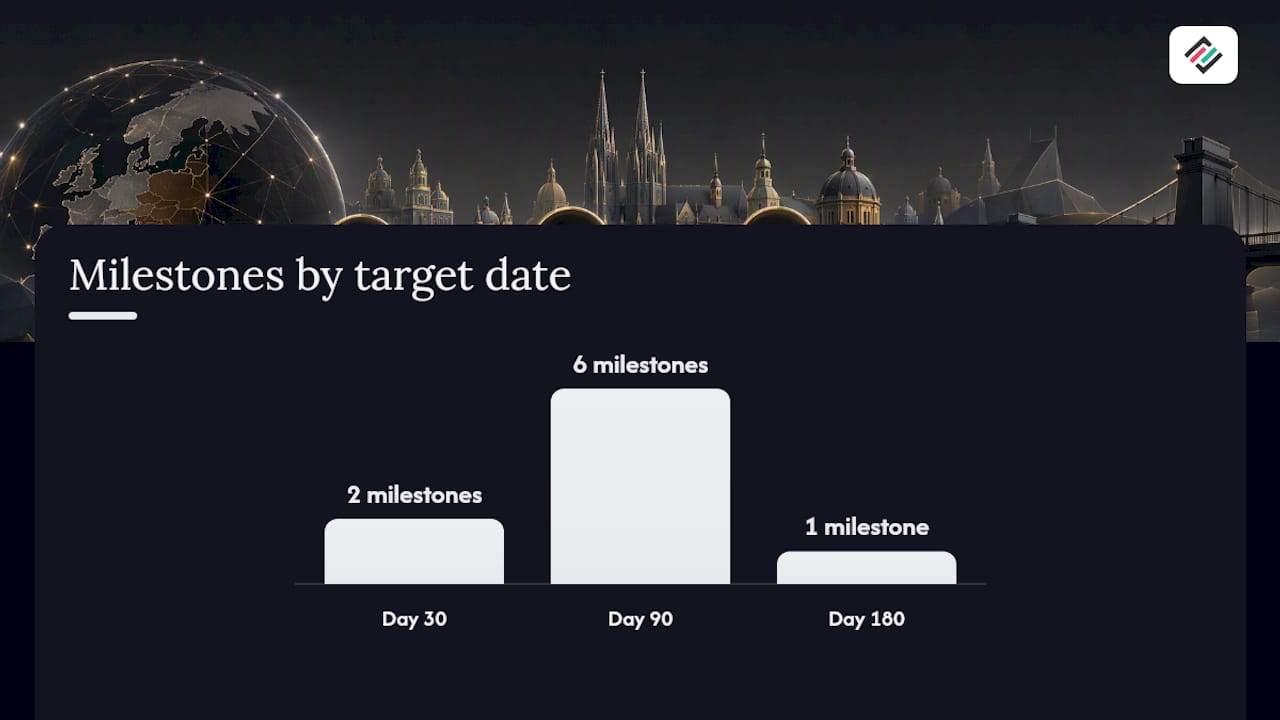
What does a 30/90/180-day compliance roadmap look like?
| Milestone | Owner | Target date |
|---|---|---|
| Exposure gap report completed | Treasury + CIO | Day 30 |
| Board policy approved | CFO + Board | Day 30 |
| IFRS 9 documentation templates live | Finance/Controllership | Day 90 |
| TMS configured and ERP feeds reconciled | CIO + Treasury | Day 90 |
| STP readiness test with top 3 counterparties | Treasury | Day 90 |
| First board compliance report issued | CFO | Day 90 |
| Internal audit review completed | Internal Audit | Day 180 |
| Poland tax-timing documentation reviewed | Tax + Finance | Day 90 |
| Sweden SEK settlement conventions confirmed | Treasury | Day 90 |
For Poland: coordinate with your tax advisor on derivative recognition timing before the first settlement date. Polish rulings tie recognition to settlement finalization, so your documentation must capture the event date explicitly. For Sweden: confirm SEK liquidity windows and local bank cut-off times with your settlement bank before going live.
What's the real compliance gap most CFOs miss?
Most CFOs treat FX compliance as a documentation exercise. The actual gap is almost always operational: exposure data arrives late, hedge files are completed after the fact, and STP rates are never formally tested. A policy that looks perfect on paper fails the moment a settlement breaks and no one has a documented escalation path.
The second underestimated risk is the IAS 21/IFRS 9 boundary. Companies that run multi-currency consolidations often let translation gains and losses bleed into their hedge accounting disclosures. Auditors catch it; the fix is expensive. Separate the two frameworks at the system level, not just in the notes.
Corphedge helps you close the compliance gap faster
Corphedge combines a live FX risk management platform with operational expert advice and TMS integrations, giving finance teams the tools to move from policy approval to audit-ready execution without rebuilding their tech stack. The platform delivers VaR-based hedging, real-time exposure monitoring, and timestamped hedge documentation that satisfies IFRS 9 designation requirements from day one. Corphedge is actively expanding support in Poland and Sweden, with local market guidance built into the onboarding process.
CFOs who want to close their compliance gap quickly can schedule a compliance readiness demo and see exactly where their current program stands against the checklist above.
Sources
- Principles for the sound management of FX settlement risk (BCBS) — BIS
- Detailed illustrations of hedging strategies — PwC viewpoint
- FX risk management: the operational framework finance teams need — insightsoftware blog
FAQ
What is the first step in building an FX compliance program?
Get a board-approved hedging policy in place before executing any hedge. It needs to name permitted instruments, approval authorities, hedge ratios, and accounting elections.

What does IFRS 9 require for hedge accounting qualification?
IFRS 9 requires formal designation at inception, contemporaneous documentation of the risk management objective, and a hedge ratio consistent with how you actually manage the risk. None of these can be backdated.
How does Poland's tax treatment of derivatives differ from IFRS 9 accounting?
Polish tax rulings tie derivative income and cost recognition to settlement finalization and documentation of the event date, which may differ from the IFRS 9 accounting period. Coordinate treasury and tax teams before the first settlement.
What settlement arrangement best reduces principal risk in FX?
Payment-versus-payment (PVP) settlement through CLS is the strongest control. When PVP is unavailable, close-out netting under an ISDA master agreement with documented SSIs is the next-best option.
How can Corphedge support IFRS 9 compliance?
Corphedge provides timestamped hedge documentation, VaR-based hedging tools, and real-time exposure monitoring that support IFRS 9 designation requirements and audit-ready reporting, with expanding coverage in Poland and Sweden.