

Managing currency risk for licensed entities while meeting audit and compliance demands is complex and resource intensive. Many solutions require heavy IT integration, hide pricing, or fail to provide both automated tools and live expert guidance in one package. This comparison covers live support, operational automation, integration requirements, and price transparency so you can pick a better fit for your team's 2026 needs.
Table of Contents
Corphedge
At a Glance
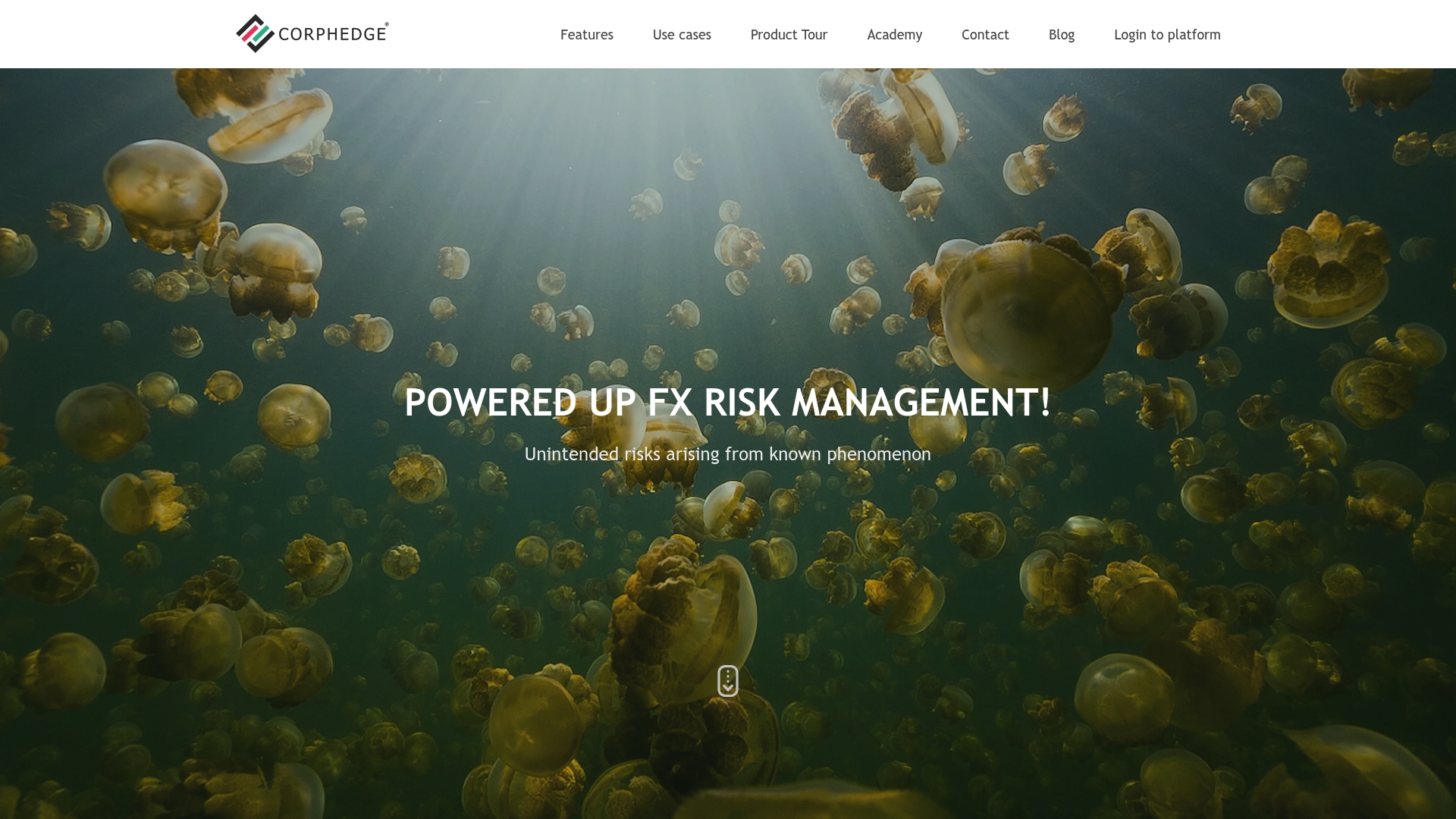
Live Risk Safari tours provide scheduled sessions with FX specialists who deliver macro insights and practical hedging guidance. The service pairs these sessions with a cloud based SaaS that offers automated analysis, backtesting, and real time alerts. The vendor advertises integrations with platforms such as Corpay and highlights security, lower costs, and constant availability as selling points.
Core Features
Corphedge delivers operational tools for FX risk management tied to portfolio tracking and reporting. It runs automated analysis and backtesting of FX strategies and sends real time notifications and alerts. The system supports import and export of cash flows and trade data for combined analysis. Scenario analysis and stress testing use historical data to model exposures and outcomes. It also includes balance sheet and transaction exposure management, hedging policy creation, and an educational FX hedging course.
Key Differentiator
Corphedge combines a user friendly FX risk management SaaS with live expert sessions and a structured educational offering. That mix lets finance teams access both automated analytics and scheduled expert guidance from the same interface. The blended model targets SMEs that want corporate grade methods without hiring external specialists full time.
Pros
-
Provides a user friendly SaaS experience that reduces the learning curve for SMEs and finance teams. This lowers the internal effort needed to get basic hedging workflows running.
-
Offers live expert interaction through Risk Safari tours that translate macro views into actionable recommendations. Teams can test strategy ideas during a live session and get direct feedback.
-
Includes analytical tools for backtesting, scenario analysis, and reporting that support policy creation and governance. Those tools help you document why a hedge was chosen and how it performed.
-
Lets teams import and export cash flows and trades so models run on real company data. That capability improves the realism of stress tests and exposure reports.
-
Focuses on cost reduction for smaller firms by making techniques used by larger corporations available through a subscription model.
Cons
- The service targets business users and finance teams, so it may not fit individual traders or very small operations that need simple retail trading tools.
Who It's For
Finance managers, treasury leads, and compliance officers at SMEs and corporates who handle cross border cash flows will benefit most. The product fits teams that want to pair analytics with expert coaching and a structured training program. It also suits organizations that must formalize hedging policy and reporting for audits and board reviews.
Unique Value Proposition
Including a detailed FX hedging course alongside scheduled expert sessions reduces reliance on external consultants and shortens the learning curve for in house teams. That setup lets you move from policy design to monitored execution while keeping analysts and management on the same page. For teams with limited FX experience, the education plus live support lowers operational risk and speeds adoption.
Real World Use Case
A European importer of Latin American fruits uses Corphedge to hedge USD cash flows. The team uploads expected receipts and payables, runs scenario tests on historical volatility, and backtests candidate strategies. They then book a Risk Safari session to validate the chosen approach and implement the hedge with documented policy rationale.
Pricing
Corphedge does not publish standard pricing online. The vendor asks interested users to contact sales or schedule a demo to discuss plans and enterprise arrangements. Pricing likely varies by company size and the scope of expert services requested.
Website: https://corphedge.com
Fxity
At a Glance
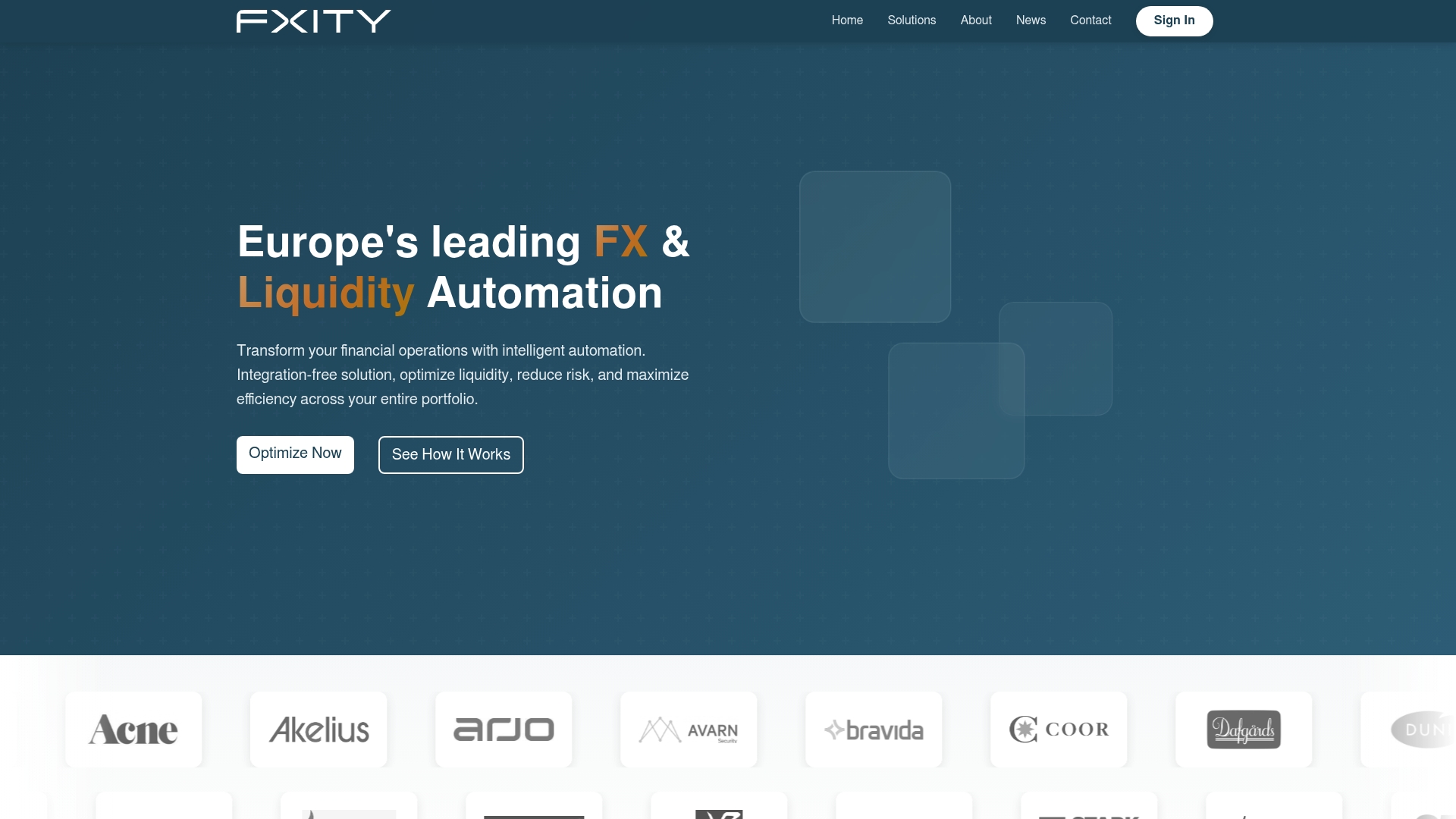
The vendor advertises fast automation rule setup in about 45 minutes. Fxity also claims integration-free FX and liquidity automation that runs 24/7. According to the company, it operates under Swedish regulatory supervision. These points position the product for treasuries that need continuous execution without heavy IT projects.
Core Features
- Integration-free liquidity and FX automation that does not require deep system connections.
- Automated strategic decision making for treasury that applies rules to manage liquidity and FX exposure.
- Order execution through multiple dealer platforms to seek competitive pricing across venues.
- Regulatory oversight under Swedish authorities as reported by the vendor.
- Continuous operation around the clock so liquidity functions run regardless of time.
Key Differentiator
Fxity’s real differentiator is the vendor claim of a fully integration-free automation model that still executes on multiple dealer platforms. That approach reduces implementation friction for treasury teams without full IT projects. For teams that prefer rule-based automation and hands-off execution, that model can cut setup time and ongoing maintenance work.
Pros
-
Automates repetitive treasury tasks saving significant staff time and lowering manual error risk.
-
24/7 operation keeps liquidity rules active outside business hours so exposures get handled continuously.
-
Useful for small treasury teams because it limits the need for in-house IT resources and monitoring.
-
Fast rule setup reported at about 45 minutes allows quick pilot runs and faster validation against live flows.
-
Multi-dealer execution can improve price competition for order fills compared with single counterparty setups.
Cons
-
The public feature list lacks granular detail. Buyers must request product docs to verify rule complexity and reporting.
-
Customer feedback mostly appears as vendor testimonials rather than independent reviews. That raises verification work for procurement.
-
No transparent, publicly listed pricing. Procurement teams will need to request quotes and discuss commercial terms.
When It May Not Fit
Fxity suits organizations with meaningful FX exposure and active liquidity needs. It is less appropriate for very small companies or individual traders with occasional FX activity. The vendor also shows limited public detail on customization and scaling, which may frustrate complex enterprise requirements.
Who It's For
Financial institutions and corporate treasuries that manage ongoing FX and liquidity flows and want automation without heavy integration work. Treasury managers with limited IT support will appreciate the vendor’s integration-free claim. Large corporates with high frequency or continuous exposure will get the most value.
Real World Use Case
A multinational company used Fxity to automate FX trades and liquidity decisions overnight. The automation applied fixed rules and executed across several dealers. The company reduced manual trade windows and cut reconciliation time while keeping intraday liquidity targets active.
Pricing
The vendor does not publish public pricing. The product data lists pricing as informational only. Procurement teams must contact Fxity for a tailored quote based on volume, execution needs, and any optional services.
Website: https://fxity.com
Compuhedge
At a Glance
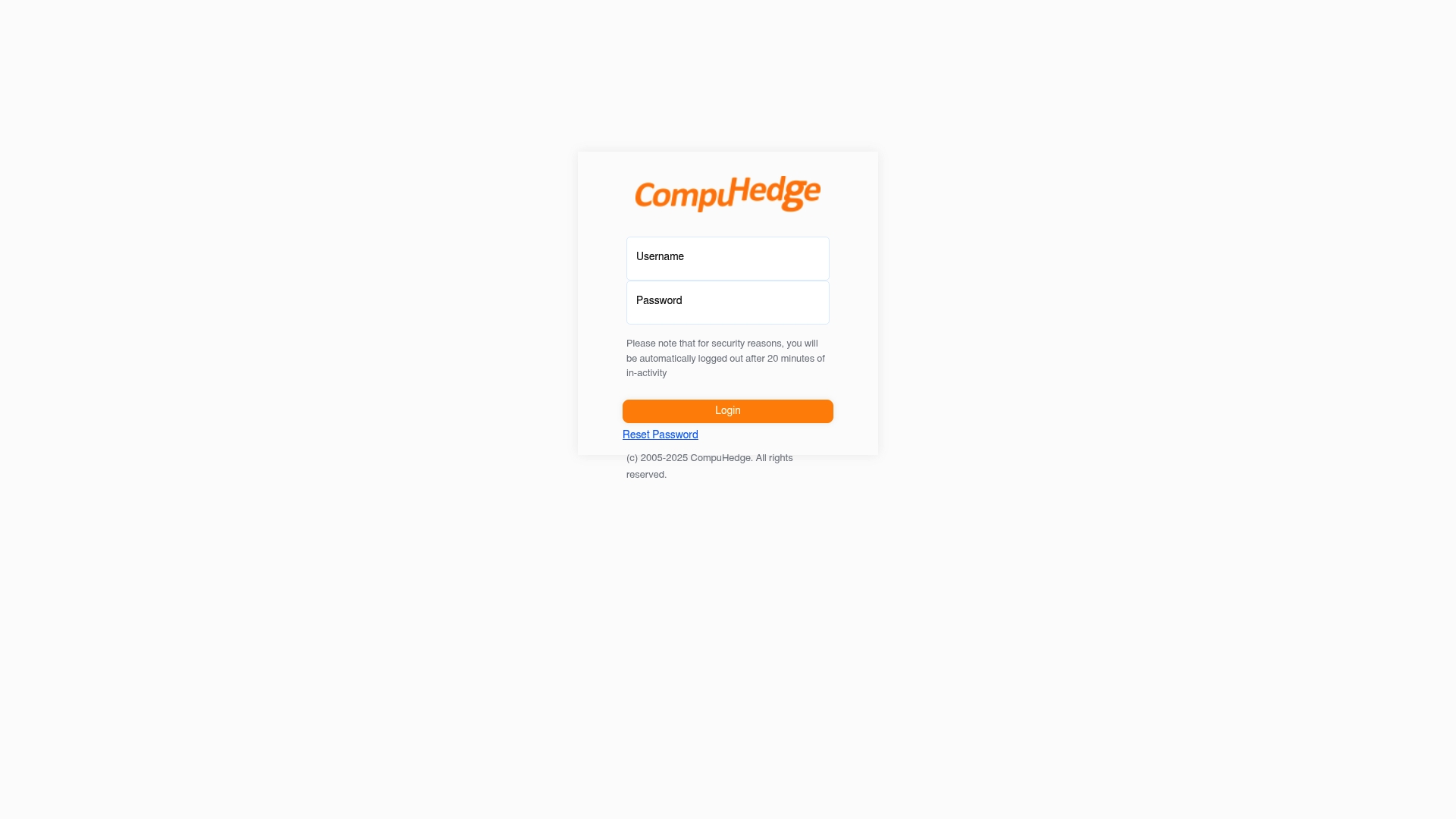
Multiple core pages return 404 errors, leaving features, integrations, and use cases inaccessible. The visible site surface shows a secure login flow with two-factor authentication and password reset. The public site appears misconfigured, so anyone researching the offering will hit missing pages and limited information.
Core Features
The site exposes a basic identity surface that includes two-factor authentication for user login. It also contains password management flows such as password change and password reset. There are links and guidance related to Azure domain configuration resources. Outside those items, the site provides little product detail or documented workflows.
Key Differentiator
The clearest finding is that no definitive product features or packaged offering can be determined from the accessible content. That absence is the product signal here. Instead of a polished product page, the site behaves like an identity gateway with configuration notes and login tools.
Pros
- Offers a secure login process. The visible pages show a proper login form with multi-factor steps and session control.
- Includes password reset and change workflows. Those flows work when you access the login area and follow reset steps.
- Provides actionable guidance for Azure domain configuration. The guidance can help domain admins align identity settings with Azure.
- Focus on access management. For organizations that only need a secure frontend login, the existing features are usable.
Cons
- Core product pages are missing. Multiple public sections return errors, which blocks evaluation of capabilities and pricing.
- No clear product or service description. The absence of documentation forces direct contact to learn what is offered.
- Website configuration problems hinder usability. Broken links and 404s reduce trust for procurement teams.
- No evidence of support or pricing information on public pages. That makes procurement and vendor comparison difficult.
When It May Not Fit
This site will not fit buyers who need full public documentation for audits or vendor due diligence. It is a poor match for compliance officers who require published security claims and certifications. If you need clearly documented product features or published pricing for procurement, this setup will delay selection and sourcing.
Who It's For
IT administrators and identity managers who already have vendor contact channels and only need a guarded login endpoint may use the visible features. Small teams that want simple multi-factor login and password workflows could adopt what is present. Larger organizations or teams requiring published integrations and documentation will find the site inadequate.
Real World Use Case
Use the login and reset flows to manage employee access to an enterprise web application. Admins can apply the Azure domain notes while configuring single sign on for the app. The visible features support basic identity control for a single application front end.
Pricing
No public pricing or plans are provided. The product data notes pricing is not applicable and the site appears informational only. Expect to contact the vendor directly for any commercial terms or deployment costs.
Website: https://compuhedge.com
MASTIX
At a Glance
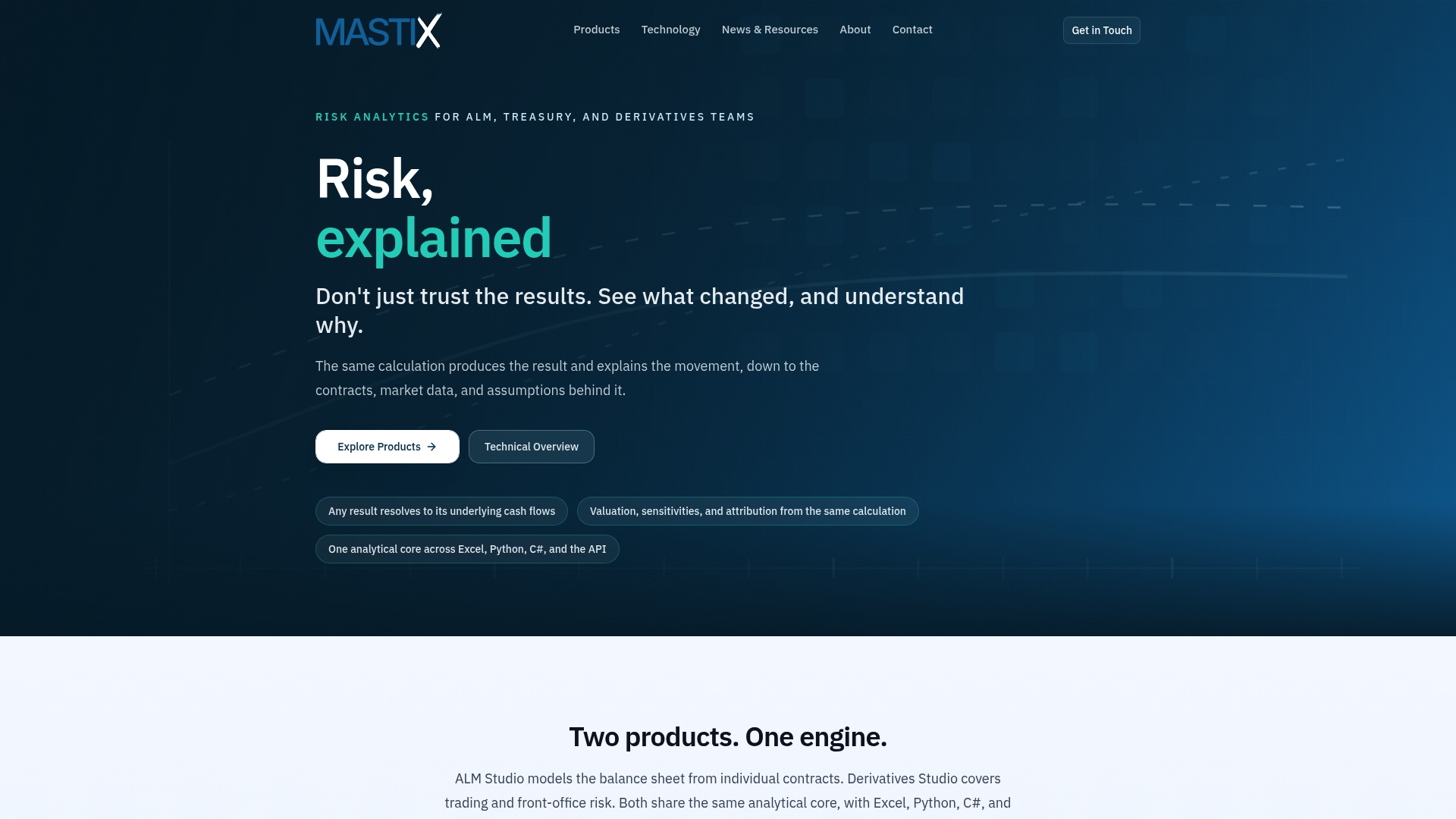
MASTIX uses Adjoint Algorithmic Differentiation (AAD) to compute exact sensitivities as part of the valuation in a single analytical pass. That single pass lets teams run interactive scenario analysis with sensitivities and attribution tied back to the same engine. The product targets ALM and derivatives workflows where traceability and repeatable audit trails matter.
Core Features
- Single analytical core that keeps valuation, sensitivities, and attribution on the same model.
- Adjoint Algorithmic Differentiation (AAD) to produce exact sensitivities in one pass for faster profiling.
- Interactive scenario analysis for balance sheet and trading book decisions.
- Full traceability from inputs to valuation for audit and governance.
- Direct connectivity to Excel, Python, C#, and APIs for reporting and workflows.
Key Differentiator
The standout technical approach is the embedded AAD engine that computes exact sensitivities during valuation. That design removes the usual mismatch between valuation runs and sensitivity approximations. As a result, users get instantaneous sensitivity profiles and attribution that align with the numbers used for reporting and governance.
Pros
- Fast interactive analysis that supports decision meetings. Analysts can open scenarios, inspect sensitivities, and present consistent attribution in the same session.
- Consistent outputs because valuation, sensitivities, and attribution share one analytical core. That reduces reconciliation work between teams.
- Detailed breakdowns to contract level and to specific modeling assumptions. This helps governance review and audit trails.
- Lower hardware cost compared with legacy Monte Carlo farms, according to vendor materials. That makes broad modeling feasible on more affordable infrastructure.
- Flexible integration paths into Excel and Python. Treasury and quant teams can keep familiar workflows while moving to a single engine.
Cons
- The underlying AAD math is complex and demands quantitative skill. Teams without in house quants will face a learning curve.
- Integrating MASTIX with legacy data feeds and book structures will need engineering effort and clear data governance.
- The product targets technical risk teams and may be overkill for smaller or non quantitative treasury groups.
When It May Not Fit
MASTIX is not a good match for small treasury teams that lack quant resources. It also does not suit organizations without disciplined, high quality data feeds. If you need a lightweight general ledger tool, this product will not be the right fit.
Who It's For
The ideal users are quantitative risk teams, ALM specialists, and treasury managers in banks and similar institutions. Teams that require fast, explainable sensitivity outputs and audit trails will get the most value. The product suits groups that can dedicate technical resources to implementation and data mapping.
Real World Use Case
A European bank uses ALM Studio for capital planning and cross functional reporting across treasury and ALM functions. Munksjo treasury runs credit risk modeling and direct analysis from Excel and Python against the same analytics core. Those deployments show how teams convert scenario output into governance ready reports.
Pricing
The vendor lists pricing as informational only. There is no published standard tariff on the website. Expect a licensed deployment model that will vary by module, deployment scope, and integration needs.
Website: https://mastix.se
Comparison of alternatives
Selecting the appropriate currency risk management solution involves evaluating each option's strengths in expert guidance, automation, and analytical precision. Here's how the leading options compare:
Expert guidance and strategic support
Corphedge excels in offering structured FX strategy training and expert guidance. The "Risk Safari" features add a hands-on, interactive aspect to the software, which is for Small-to-Medium Enterprises (SMEs) aiming to develop internal expertise without significant external consultancy costs. For instance, SMEs handling international transactions benefit from having their strategies co-reviewed with experienced professionals in real time.
Automation and precision tools
Fxity thrives in delivering autonomous liquidity and FX exposure management. Its 24/7 continuous execution without requiring integration means that financial teams can operate more efficiently with fewer technical dependencies. Meanwhile, Mastix provides an advanced analytical engine utilizing Adjoint Algorithmic Differentiation (AAD). It targets ALM and derivatives environments where precision and traceability of results are, making it suitable for institutions with in-depth quant teams.
Best fit
- Corphedge: Best for companies seeking to combine expert-guided strategic development with an accessible and intuitive FX management platform, especially SMEs developing their first formal policies.
- Fxity: Ideal for treasuries valuing hands-off liquidity management and fast operational readiness without significant IT investments.
- Mastix: Perfect for entities focusing on analytical immediacy and transparency in sensitive environments like derivatives and ALM.
Our pick
Corphedge uniquely integrates live expert sessions with powerful yet user-friendly FX management tools, directly benefiting SMEs or organizations venturing into structured FX strategies. However, institutions with distinct automation or precision modeling needs might find other options to better suit their requirements.
Explore currency risk management software platforms that effectively balance analytical tools and implementation support.
| Product | Core Features | Key Differentiator | Best For | Notable Limitation |
|---|---|---|---|---|
| Corphedge | Automated FX analysis, backtesting, alerts | Combines SaaS analytics with expert sessions | SMEs and corporates managing cross-border cash | Targets businesses, not individual traders |
| Fxity | Integration-free FX and liquidity automation | No integration needed for deployment | Treasury teams with limited IT resources | Public specs lack detail |
| Compuhedge | Basic login management, 2FA | Focus on secure identity workflows | Gateways requiring minimal identity management | Core product information missing |
| MASTIX | Adjoint Algorithmic Differentiation (AAD) core | Sensitivity computations in a single analysis | Quantitative risk teams in financial institutions | Demands expertise in quantitative methods |
Smart Solutions for Accounting for Licensed Entities with Corphedge
Accounting for licensed entities often means managing complex foreign exchange risks and maintaining transparent documentation on hedging policies and exposures. These challenges can feel overwhelming when striving to meet compliance and audit standards while controlling operating costs. Corphedge offers an all-in-one platform designed to simplify FX risk management for finance teams handling cross-border cash flows.
Corphedge combines a user-friendly SaaS with live expert sessions and strategic tools that help you automate analysis, backtest hedging approaches, and receive real-time alerts. Its integration capabilities with platforms like Corpay provide added efficiency for licensed entity accounting workflows.
Take control today by visiting Corphedge to schedule a demonstration and discover how importing your actual cash flows can deliver actionable insights aligned with your accounting needs for licensed entities.
FAQ
What features make Corphedge a strong choice for accounting for licensed entities?
Corphedge offers a user-friendly SaaS experience that simplifies FX risk management for finance teams. It includes automated analysis and real-time alerts, as well as educational components like an FX hedging course. For teams looking to manage currency risks effectively while also learning about the process, Corphedge presents a compelling option.
How does Corphedge compare to Fxity for automating currency risk management?
Fxity excels in offering integration-free FX and liquidity automation that can be set up in about 45 minutes, making it ideal for teams seeking quick solutions without heavy IT involvement. However, Corphedge combines live expert sessions with automated analytics, appealing to organizations that require both personalized training and robust data handling.
What kind of team would benefit most from using Corphedge?
Finance managers and treasury leads at SMEs dealing with cross-border cash flows will benefit significantly from Corphedge's blend of analytics and expert guidance. Its structured educational offerings help less experienced teams navigate the complexities of currency risk management.
Can small companies use Corphedge effectively for currency risk management?
While Corphedge is designed for SMEs, it may not suit very small operations that require simpler retail trading tools. However, smaller firms looking to adopt corporate-grade methods without hiring full-time specialists may find Corphedge valuable.
What security features does Corphedge offer for users?
Corphedge emphasizes security through two-factor authentication, ensuring that user data is protected. This feature is crucial for organizations concerned about safeguarding sensitive financial information while managing currency risks.